Total Pageviews

Sunday, June 12, 2011

Yorktown & Jamestown, VA

Williamsburg, Yorktown, & Jamestown comprise what is known as the “Historic Triangle”.  We had been to Williamsburg several times, but never to the other two places.
Yorktown
The seaport town was a bustling and prosperous 18th century seaport by the James River, having been established by the 1691 Act of Ports.  Today it is the seat of the county’s government, a position it has maintained since 1634.  Yorktown gained its most lasting fame as the site of the last battle of the American Revolution, when on October 19, 1781, British General Cornwallis marched his men across Surrender Field and surrendered to George Washington, setting a new country off and running. 
Our first stop was the Yorktown Victory Center.  In a re-creation of a soldier’s camp we first watched a costumed interpreter explain how they loaded and fired artillery.  After that we listened to a nurse tell how they cared for the soldiers’ illnesses.  There were tents to look into with cots the soldier’s slept on.  Then to cool off, we watched a movie, “A Time of Revolution” which gave some additional history, and then we toured the museum.
Then again to the outside heat and humidity to walk around a 1780s farm, seeing tobacco grow, saw much of it hanging in a barn, a small family dwelling with a separate kitchen, crop fields, vegetable and herb garden, and a slave’s garden.  Turkeys, chickens, ducks were also there.  Again, we learned a lot from one of the ‘gentleman’ from the period! 
Our next stop was the Yorktown Colonial National History Park where we viewed more military information showing America’s evolution from Colonial status to nationhood chronicled through a unique blend of timeline, thematic exhibits and outdoor living history that emphasizes the experience of ordinary people. 
We drove the Yorktown Battlefield Tour, exploring fields, fortifications and historic buildings where American independence was won.  We were able to go inside a replica of the Moore House which was the site of negotiations that led the British surrender at Yorktown on October 19, 1781.  This site was chosen since it wasn’t damaged by the siege of war.  There was a ranger there to answer any questions and he gave us some great history and information about the home in the 1780s.
Along the route there were many re-doubts (dirt forts) where the soldiers dug trenches, and were then protected by the small hills of dirt they piled up.  Also in many places we saw the ‘Virginia Onion', which is a bulb on a very tall stem.  This is the only area where they grow and it is illegal to pick them.  We left the trailer at 10:30 and were done touring Yorktown about 5:00, a full day of reliving history.


 Drying Tobacco


This is a redoubt (French word) which is an enclosed defensive emplacement usually made of earth.  It was a component of the military strategies of most European empires during the colonial era. 


This is where the surrender papers were signed by General Washington and a representative of General Cornwallis


Jamestown
Our first stop the next day was the Jamestown Settlement, a living history museum of 17th century Virginia.  Thirteen years before the Pilgrims landed in Massachusetts, a group of 104 English men and boys made a four and a half month voyage to the banks of the James River to form a settlement in Virginia.  Their goal of making a profit from the resources of the New World for the Virginia Company’s shareholders in London quickly took a back seat to pure survival as they confronted the harsh realities of life in their new home.  This is known as the first permanent English settlement.
Jamestown never became the ‘great city’ John Smith envisioned in 1608, but the small colonial settlement did enable England to establish a permanent presence in North America and plant a culture that would shape a nation. 

First we watched the movie offered in the museum (which was finished being built in 2006).  We then had another wonderful guide in costume who took us on a fantastic 90 minute tour.  First on the agenda was a re-creation of a Powhatan Indian Village, we then saw three replicas of the English  ships built to 17th century specifications representing the craft that brought the settlers to Jamestown, and a re-creation of the original Jamestown fort and some of the buildings inside the triangular-shaped compound.  The Indians were the first to inhabit the land, then those from England arrived, and finally the Africans. 
We then visited Jamestown Colonial National Historical Park where we saw the James Fort excavation, the 17th century church tower and the 1907 Jamestown Memorial Church where The House of Burgesses first met.  We walked through the remains of the original settlement along the picturesque James River and went through the Archaearium where we viewed many recent artifact discoveries.  Here we also saw where they are still excavating today.  Another enjoyable but exhausting 6 hour day. 


Indian Village 


Church


 One of the 3 ships that came over from England with the settlers.  The crossing took almost 5 months.


Indian Dugout Canoe


Church


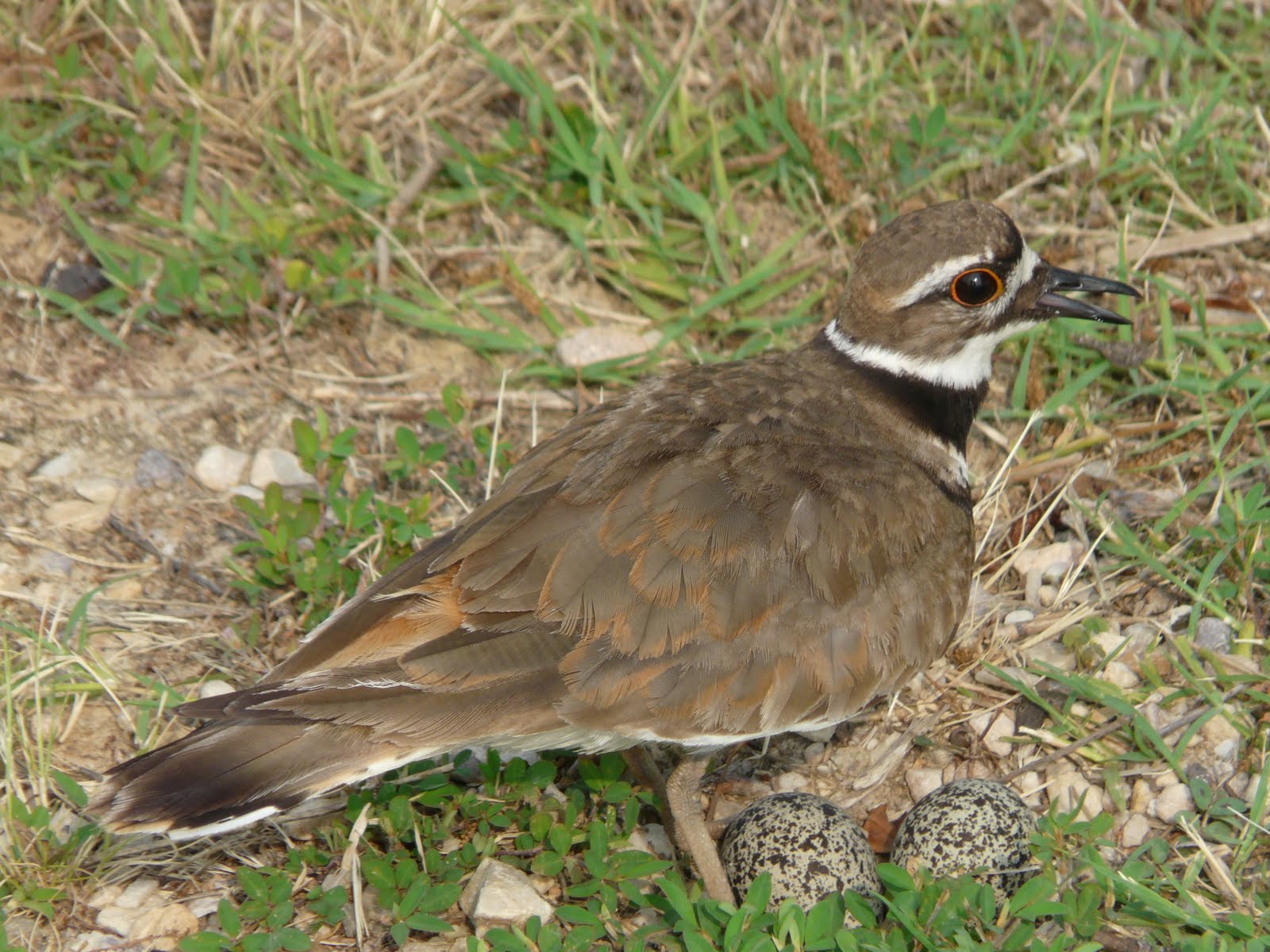
We saw this bird guarding her eggs outside the museum.

REMEMBER:  Just click on a picture to enlarge it.

Thursday, June 9, 2011

Charlottesville & Monticello, VA

Before we arrived at our destination we drove by Wytheville, VA which had the neatest water tank we have ever seen.


Here we are in Charlottesville, VA at their beautiful pedestrian mall.  The locals refer to the city  as CVille.  There is a mix of restored and renovated buildings that typified small downtowns throughout the country that can now be seen by visitors as they enjoy shopping, dining and visiting along the brick paved area.  There are more than 120 shops and 30 restaurants (many with outdoor cafes) housed in the historic buildings.  We noticed a large influx of people once they got off work at 5:00, stopping either for a drink and/or dinner.   It was cool enough to do that, especially since the sun was shining!  They do offer a free trolley service connecting the mall to the University of Virginia, but we spent almost two hours walking and shopping.  


They have a monument to the first amendment – called the “Free Speech” monument that invites free expression from, well, anybody!  It is a huge chalkboard on which you can make your views known, and read others’ too!  Once a week it is washed clean and the cycle starts again.  Mike wrote “Go Bakersfield.”


The next day we visited Monticello, the home of Thomas Jefferson, and toured the house and grounds.  He was quite a visionary, principal author of the Declaration of Independence, founder of the University of Virginia, and America’s third president.  He designed the house over a 40-year period.  It sits on a hilltop overlooking Charlottesville and the remaining 2,000 acres of the Jefferson family’s original 5,000-acre plantation.  The three-story Palladian-style structure was entirely the product of Jefferson’s own vision, begun in 1769 when he was just 26 and expanded and refined over four decades, especially after his five year stay in France as U.S. minister.  Here is the first dome on a residence in North America.  In the entrance hall hang Indian artifacts, mastodon bones, and other relics from Lewis & Clark’s expedition to the Pacific Ocean, a journey Jefferson himself had ordered.  Unfortunately you weren’t allowed to take any inside pictures.
He wasn’t an inventor but made improvements to many items.  His time was important to him and he had a clock in every room.  After serving as President, he retired to Monticello, where he concentrated on the founding of the U of V.   He died there at age 83 on July 4, 1826, and is buried on the extensive grounds.  What we saw of the gardens was beautiful.


Mike felt he needed a surprise added to our trip.  Ever since our visit with Leslie and family he felt something different happening with his pacemaker.  Today he decided to let his cardiologist know with a phone call.  Within minutes of making the call he received a message from Dr. Maddox to go see a cardiologist at an E.R.  We cut our visit touring Monticello short and took off to the University of Virginia Hospital’s E.R.  After being admitted, being given an EKG he was put into a small room, where he was hooked up to a monitor.  He was seen by at least ten different nurses/e r. doctors/a resident doctor, a fellow heart specialist,  an interrogator to interpret the results of the machine that checked the history of Mike’s pacemaker, the head cardiologist and even a doctor who wanted to see Mike’s muscle twitching!  He told them this started May 30th, which the history showed to be fact.  They finally figured out that the pacer was trying to correct a possible break in the insulation on one of the leads and reset it back the way it should be.  What an experience! 


The countryside is magnificently beautiful with all of the rolling wooded green hills, thick areas of trees lining most of the roads, and many wineries.


Monday, June 6, 2011

Chattanooga, TN

Well here we are in Chattanooga with high temps, but not as much humidity as Mississippi (still uncomfortable).

Our first sightseeing stop was Ruby Falls.  Over 80 years ago, Leo Lambert became fascinated by the idea of re-opening the Lookout Mountain Cave to the public.  This cave had been home and hideout to American Indians, Outlaws, Civil War soldiers, and even visited by President Andrew Jackson before being sealed off during the construction of the railroad at the turn of the 20th century.  During the excavation of an elevator shaft, Leo Lambert and a group of fellow explorers entered a small opening.  They spent 17 hours mostly crawling on hands and knees, exploring the cave before hearing the sound of rushing water.  They were awestruck by the magnificent beauty of the waterfall they had discovered at the deepest point.  Leo later named the falls in honor of his wife, Ruby.  We took an elevator down 260 feet into historic Lookout Mountain.  Our tour guide led us along the cave path where we saw many unique geological features including columns, stalactites and stalagmites and ending up seeing the 1,120 foot underground falls, the tallest and deepest open to the public.  They turn on a multicolored light display and you can walk behind the falls.


Our next stop was Rock City, which was a short drive up to the top of the mountain.  We walked through more geological features where there were many plants indigenous to the region.  The walk took us up and down, curvy paths, going through some VERY narrow openings between the rocks (fat man’s squeeze!)  It was cool when in between the rocks.  The view from the observation point/lover’s leap allowed us to ‘see seven states’!


On our way down the mountain we stopped to see what Craven House was, as we saw a sign by the road on our way up!   It was a home built twice by a military officer named Craven who was the richest man in the area at the time (we forgot to take a picture of the house - forgive us).  The Union took control of the area and the railroads.  This led to the capture of Atlanta during the Civil War.  What a beautiful view of the city with a nice breeze.  There were signs giving the history of the area, naming the southern and northern troops with monuments along the way.  There was a cute Park Ranger willing to share information with us.  We asked about the large insects we’ve seen many of that jump/fly, and make a large amount of noise.  It is a 13 year cicada and they only live about 5-6 weeks, this being the 4th!  They have ugly red eyes and the only good thing they do is probably die and leave the soil enriched with their remains.


The next day we headed towards downtown and took the free electric shuttle that leaves the south end of downtown and goes to the north end of the city through the financial district.  We saw the Chattanooga Choo Choo, the Convention and Trade Center, Tivoli Theatre, IMAX, museums, and more.  We stopped in the visitor’s center and then headed passed the Tennessee Aquarium, walked across a glass bridge, and toured the Hunter Art Museum in the Bluff View Art District.  There were many pieces of art along our walk, all of which were modern!  It was extremely hot and humid, which all the natives tell us is unusual for this time of year.


When we had our fill of the museum, we walked through the art district.  A local lady told us of a craft/farmer’s market that sounded interesting, so off we went.  At the very first booth we made a purchase of a painting of a simple, single tree.  It was meant to be!!!  We checked out the rest of the open-air building which had many veggies, jewelry, etc., available, but we didn’t make any more purchases.


Friday, June 3, 2011

Booneville, MS

Left Amarillo on Thursday and stayed overnight in Van Buren, AR.  We passed right by El Reno, OK where the tornado hit really hard on Wednesday.  All we saw were trees ripped out of the ground on both sides of the highway and flattened homes to the north; then through the big city of Oklahoma City; by Checotah, the home of American Idol’s Carrie Underwood; and then to Van Buren, Arkansas.  People camping next to us told us that they decided to leave Amarillo the day we stayed over.  After driving only 30 miles they gave up since they couldn’t keep their rig in one lane due to the high winds.


Friday we arrived at our daughter’s in Booneville, MS.   It was great seeing her and her husband Eric, and meeting Lulu, our 16 year old step grand-daughter.  After getting the trailer in ‘it’s’ place we were given the tour of the huge garden they have planted.  Their bushes/trees have gotten bigger, but not much else has changed around the house besides the nice, new paint in the living room and hallway.


Saturday, when Eric returned from work, he and Mike went fishing with their neighbor to a private pond.  They slayed the fish, using cooked hot dogs as bait!  Eric and Mike caught eight large cat fish in an hour.  It was a thrill catching such large fish.  After Eric and Lulu cleaned them they had 15 pounds of filets.  We are getting used to Lulu calling us Ma-Maw and Pa-Paw.


Sunday we were invited to neighbors for a fish fry.  We had brim they caught and the catfish Eric & Mike caught.  It was delicious – can never have too much catfish.  The remainder of the time was spent shopping in Tupelo, eating out, eating in, and just enjoying each other’s company.  We leave with great memories and many chigger and mosquito bites.